
Migraine Care
Northwest DPC & Headache cares for migraine as part of a broader umbrella of headache disorders. Because migraine is a neurologic condition with many contributing factors, we use a multimodal approach tailored to your pattern and goals—this can include traditional oral preventives and acute medications, newer oral and injectable therapies, Botox (when indicated), neuromodulation devices, and supportive strategies such as counseling, physical therapy, and dietary adjustments. If you’ve identified specific triggers (for example, weather or barometric pressure changes), we can build a targeted regimen that anticipates and treats attacks early. We’ll also look for other conditions and medication patterns that can worsen headaches, so your plan addresses the full picture—not just the pain.
Migraine vs Headache
Migraine is a neurological condition that can cause head pain along with nausea, light sensitivity, sound sensitivity, and brain fog. Some people experience aura (visual or sensory symptoms) before or during attacks. If migraines are disrupting your life, a clear diagnosis and a plan can make a big difference.
VS
Headaches are a very common condition comprised of many different diagnoses. Migraines are a common and disabling form of this; however, Tension headaches are overall the most common type. Most headaches aren’t dangerous, but certain types can be a sign of a serious underlying condition.
Episodic vs Chronic Migraine
Migraine exists on a spectrum. The distinction matters because it changes which treatments help most.
Episodic Migraine
Fewer than 15 headache days per month, with migraine features on some of those days. These don’t qualify for Botox, but they qualify for many other treatments. Untreated, these can progress to Chronic Migraine and increase risk of other complications of migraine.
VS
Chronic Migraine
Headache on 15+ days/month, with migraine features on 8+ days/month for at least three months. Botox is generally reserved for chronic migraine. A multimodal approach with different pharmacologic and non-pharmacologic therapies are usually recommended to help control these.
Common Migraine Symptoms
Migraine is often more than head pain. Symptoms can include:
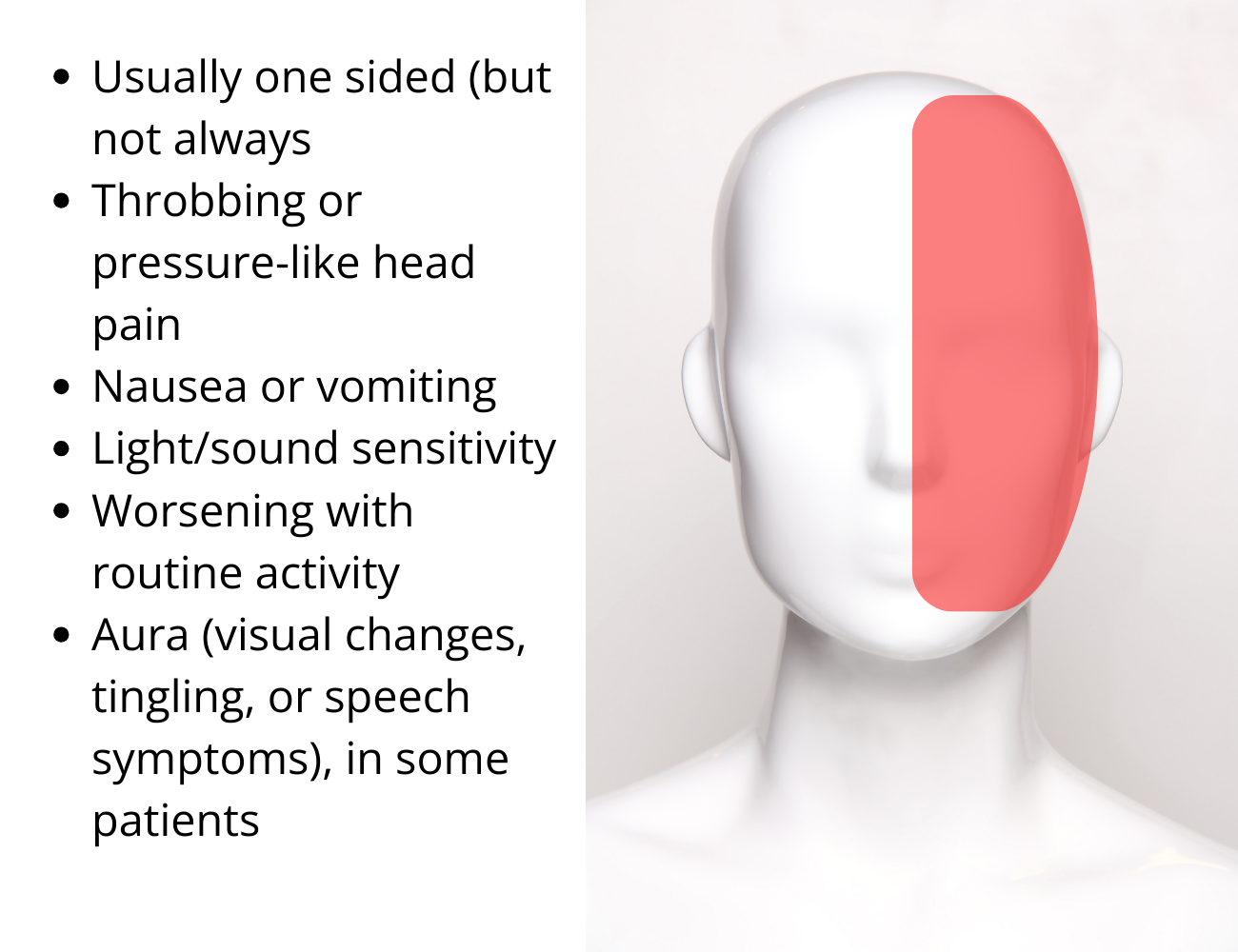
Other symptoms may also include:
Sensitivity to touch your hair or scalp
Abdominal complaints
Disability and other unspoken difficulties, such as wage loss, stigma, social isolation, and increased risk of other conditions and complications
When Migraine Needs Emergent Evaluation
These situations aren’t
“typical migraine”
and warrant prompt medical evaluation
Seek emergency evaluation for:
Sudden “worst headache of your life”
Headache with fever or neck stiffness
Neurologic deficits
Headache after head injury
New headache after age 50
Headache symptoms that are not consistent with your normal migraine
Potential Treatment Options
Depending on your symptoms, history, and goals, you have options to explore with your primary care or headache physcian.
Procedure-based treatment
Botox can be an effective preventive treatment for some patients with chronic migraine, especially when headaches are frequent and disruptive.
- Typically considered for chronic migraine rather than occasional migraine
- Given in the office using a standardized injection pattern
- May be used on its own or alongside other preventive therapies
Targeted therapy
These newer migraine treatments target CGRP pathways and may be used for prevention or, in some cases, acute treatment.
- May help reduce migraine frequency and severity
- Includes oral, injectable, and infusion-based options depending on treatment
- Sometimes used alongside Botox as part of a broader migraine plan
Device-based option
Device-based treatment can be a useful non-drug option for some people with migraine, whether for acute attacks or prevention.
- Drug-free option for selected patients
- May be used alone or alongside medication
- Can be appealing when side effects or treatment burden are concerns
During an attack
These treatments are used during a migraine attack to reduce pain, nausea, or other symptoms and help you recover sooner.
- May include triptans, gepants, anti-nausea medicines, or NSAID-based strategies
- Choice depends on speed of onset, side effects, and medical history
- Too-frequent use can worsen headaches over time, so a treatment plan matters
Prevention
Prevention is meant to reduce migraine frequency, severity, and disruption to work, family, and daily life.
- May include CGRP-targeted medicines, blood pressure medicines, antidepressants, anti-seizure medicines, or Botox
- Often selected based on migraine pattern and other health conditions
- Usually works best when paired with lifestyle strategies
Office-based support
For some patients, office-based procedures can help when neck pain, scalp tenderness, or occipital pain is part of the headache pattern.
- May be useful in selected migraine or occipital neuralgia cases
- Can be part of a broader treatment plan
- Often considered when pain has a strong neck or muscle component
Next Steps
If you’re ready for a structured plan, start with a headache intake visit. If you already track headache days/month and medication use, bring that info—it helps us move faster.